The Flatiron Neighborhood Is Different
The Flatiron sits at a crossroads. It's downtown energy with uptown infrastructure. It's trendy without feeling like a trend. It's developed without feeling overdeveloped.
The neighborhood is bounded roughly by Fifth Avenue to the west, Broadway to the east, 14th Street to the north, and Houston Street to the south. But it doesn't feel bounded. It flows into Gramercy, SoHo, and Greenwich Village naturally.
10 Madison Square West sits at the north edge of the neighborhood, directly adjacent to Madison Square Park. This proximity defines the entire area.
The neighborhood has two distinct vibes. The immediate area around Madison Square Park is more polished, more intentional, more developed. The blocks south toward Flatiron proper are grittier, more bohemian, more mixed-use. Both exist. Both matter.
Understanding which part of Flatiron appeals to you changes everything about whether this neighborhood works for you.
Madison Square Park: Your Backyard
Madison Square Park is the neighborhood's defining feature.
If you live around 10 Madison Square West, you have direct access to one of Manhattan's most significant parks. Not Central Park. Not Prospect Park. But a park that serves a specific purpose and does it extremely well.
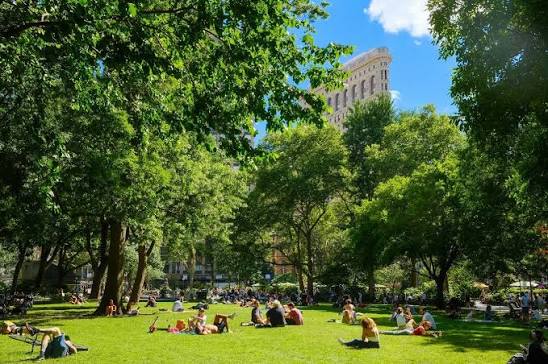
The park is 6.2 acres. It's intimate enough to feel like an actual gathering place, not just green space. It has real trees, real lawn, real benches where people actually sit.
In summer, the park is alive. Food vendors set up. The lawn gets crowded. People bring wine and sit. There's a buzz that feels different than other parks. More local. More community.
In fall and spring, it's quieter but more beautiful. The trees change. The light changes. People walk through purposefully, not just passing through.
Winter is different. Fewer people. But the park has bones. The historic buildings surrounding it frame it beautifully. It feels almost European in winter.
Living next to Madison Square Park means you have a genuine outdoor gathering space. You don't need a backyard. You don't need to go to the Hamptons on weekends. Your neighborhood has a park that actually functions as a neighborhood amenity.
The Restaurants and Bars: Flatiron's Real Draw
The neighborhood around 10 Madison Square West has more good restaurants per block than almost anywhere else in Manhattan.
Shake Shack started here. It's still here on Madison Square Park. It's where tourists go, yes. But locals still eat there because it's good and it's convenient and it's part of the neighborhood identity.
But beyond Shake Shack, there's everything else.
Eataly sits on the southwest corner of Madison Square Park. It's massive. Multiple floors of Italian food, wine, prepared dishes, and ingredients. You can grab lunch, do your grocery shopping, or sit down for a full meal. It's become a destination in itself, but it's also genuinely useful for neighborhood living.
Eleven Madison Park is just south on Madison Avenue. It's one of the city's most acclaimed restaurants. Fine dining, serious chef, exceptional experience. It's expensive. It's worth it if you want to celebrate something.
Maialino, also on Madison Avenue, is Italian. Serious Roman cuisine. Less formal than Eleven Madison Park, better price point, still excellent food. This is where locals actually go.
Madison Avenue between 23rd and 26th has restaurants that matter beyond these flagships. Serious restaurants. Places where chefs have opinions and execute them. Places where you can get exceptional food without traveling across the city.
The side streets are where real neighborhood life happens. Cafes where you can work all morning and nobody cares. Wine bars where you know the staff. Artichoke Basille's for pizza. Abc Kitchen for casual but excellent food.
North toward Gramercy, the energy shifts. More bars. More nightlife. More young professionals working late and looking for a drink. Mesa Grill if you want Latin American. Craft if you want sophisticated cocktails.
South toward SoHo and NoLita, it's more established restaurants, more destination dining. Balthazar just south is French. Lombardi's is pizza. Both are neighborhood institutions that have been around forever.
The point is this: You're not isolated. You have everything within a five-minute walk. You don't need to travel for good food. The neighborhood is built on restaurants and bars existing as neighborhood gathering places, not just tourist attractions. Whether you want casual pizza, fine dining, Italian food, or cocktails, it's here. And it's good.
The Commute: Better Than You'd Think
Living around 10 Madison Square West means excellent transit access.
The N, R, W lines run directly south-north through the neighborhood. The 6 line runs nearby. The 4, 5 lines are close. The L line is accessible. You have real options.
To Midtown, the commute is 10 to 15 minutes. To the Financial District, 15 to 20 minutes. To Brooklyn, you're crossing the bridge or taking the subway, both are reasonable.
The neighborhood sits at a geographic sweet spot. You're south enough to be connected to downtown energy. You're central enough to reach uptown quickly. You're not stuck in a corner.
But here's what matters more than the numbers: The neighborhood itself is walkable enough that many people walk to work. Madison Avenue. Fifth Avenue. Broadway. These are all pedestrian thoroughfares. In nice weather, people just walk.
The streets are wide. The sidewalks are substantial. Walking here feels different than walking in cramped neighborhoods. You can move.
The Buildings Around 10 Madison Square West
The architecture in this neighborhood is part of its identity.
The Flatiron Building itself sits just south of 10 Madison Square West. It's an iconic building. It's also genuinely imposing. If you live nearby, you're living in proximity to one of the most recognizable buildings in the world.
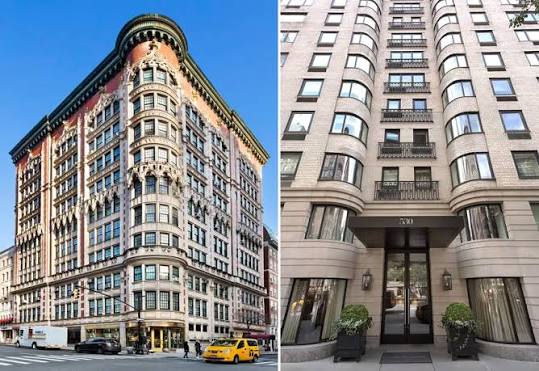
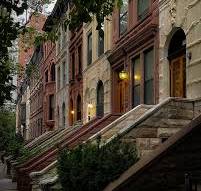
The surrounding buildings are a mix. Historic pre-war buildings with real character. Modern luxury buildings with floor-to-ceiling windows. Converted industrial buildings. Mixed-use buildings where ground-floor restaurants and shops mean street-level energy.
10 Madison Square West itself is a modern luxury building. It's distinctive architecturally. It has a specific aesthetic. The nearby buildings respect that while maintaining the neighborhood's mixed character.
This architectural diversity matters. The neighborhood doesn't feel monotonous. It doesn't feel like a single development. It feels like different eras of Manhattan existing together.
Who Lives in Flatiron
The neighborhood has a specific demographic. Not exclusively, but characteristically.
There are young professionals in their 20s and 30s who work in tech, finance, or media. They live here because it's central, it's walkable, it has nightlife.
There are established families who've lived here for decades. They know the neighborhood before the renovation. They've watched it change. They stay because they know it.
There are empty nesters downsizing from larger apartments elsewhere in Manhattan. They want walkability and access to culture without managing a big space.
There are investors. Single apartments. Multiple apartments. People who understand that Flatiron real estate holds value.
The mix is what makes the neighborhood work. It's not a single demographic. It's a neighborhood where different groups coexist.
The Energy: What People Don't Expect
Living around 10 Madison Square West means living in a neighborhood with actual energy.
The streets are active. Morning, afternoon, evening. There are people moving through. There are people sitting. There are people working. There are people eating and drinking and gathering.
This energy is different than neighborhoods that are quiet and residential. It's also different than neighborhoods that feel like tourist destinations. Flatiron is local energy. Intentional. Real.
Some people love this. They thrive on urban density and walkability and access. They want to step outside their building and be in the neighborhood immediately.
Some people find it exhausting. The constant activity. The noise. The crowds. If you're looking for peace and quiet, this isn't your neighborhood.
Understanding which type of person you are matters. Flatiron rewards people who want to be part of an active neighborhood. It frustrates people who want to escape into quietness.
The Parks and Green Space
Beyond Madison Square Park, there's more green space than you'd expect.
The Gramercy Park neighborhood is just north. If you have access (and some buildings grant it), it's an exceptionally well-maintained private park.
Washington Square Park is south. Union Square is east. The High Line is accessible by walking south and west.
This is Manhattan's most park-rich neighborhood. You have real outdoor options without traveling across the city.
In the summer, you can plan weekends around which park to visit. Madison Square Park for lunch. Washington Square Park for evening drinks. The High Line for a sunset walk.
It's not the same as living next to Central Park. But it's better than most Manhattan neighborhoods for green space and outdoor gathering.
The Shopping and Services
The neighborhood has everything you need within walking distance.
Madison Avenue has high-end retail. Fifth Avenue nearby has major brands. Broadway has everything else. Smaller streets have independent shops, coffee places, hardware stores, dry cleaners, everything.
You don't need to travel for services. The neighborhood is built on being accessible and walkable for daily life.
The grocery stores are good. The pharmacies are nearby. The gym options are substantial. The coffee shops are numerous.
This convenience matters more than people realize until they're actually living here. Neighborhoods where you can handle your daily life within a few blocks feel different than neighborhoods where you need to travel.
Gyms and Workout Classes: Serious Fitness Options
If you live around 10 Madison Square West, you have exceptional fitness options within walking distance.
Equinox has a major location on Madison Avenue near the neighborhood. It's high-end, comprehensive, serious gym infrastructure. Multiple floors, pool, spa, serious weight room, classes, personal trainers. It's expensive. It's also genuinely good.
Barry's Bootcamp is nearby. High-intensity interval training. Rowing, treadmill, weights. People are obsessed with Barry's. The classes are tough. The community is real. If you're into HIIT workouts, this is where you go.
Peloton has a studio in the area. If you're a bike person, this is the community. Classes are packed. The energy is real. Instructors matter. It's become a lifestyle, not just a workout.
SoulCycle is close by. Indoor cycling but less intense than Peloton. Community-focused. Music-driven. Different vibe but equally devoted followers.
Rumble Boxing is in the neighborhood. Boxing classes, serious instruction, real workout. If you want to punch something while getting fit, this is your place.
Fogo de Chao is also nearby if you want Brazilian jiu-jitsu or martial arts training. Serious instruction, real community.
Beyond the branded studios, there are regular gyms. 24 Hour Fitness. NY Sports Club. Basic gym infrastructure at lower price points if you don't need the premium studio experience.
The yoga options are substantial. YogaWorks has a location nearby. Yoga studios are on almost every block. Hot yoga, vinyasa flow, restorative yoga. Pick your style.
The point is this: The neighborhood caters to fitness-serious people. You have options at every price point and every fitness philosophy. High-end luxury gyms like Equinox. Boutique studios like Barry's and Peloton. Regular neighborhood gyms. Yoga everywhere.
Living here means you have no excuse not to work out. Everything is accessible. Classes fit into your schedule. The fitness community is active and real.
The Nightlife: Gramercy Versus Flatiron
The neighborhood has two nightlife vibes.
North toward Gramercy Park, there are bars that cater to young professionals. Wine bars, cocktail bars, beer bars. Places where people end up after work.
South toward SoHo, there are more established bars and restaurants. Places where people intentionally go for an evening out.
West toward Madison Square Park, there's more upscale dining and cocktail bars. Places with reservations and dress codes.
The point is, the neighborhood offers options depending on your mood and your vibe. You're not forced into a single type of nightlife.
What Living Here Costs You
Flatiron around 10 Madison Square West is expensive real estate.
The neighborhood is desirable. The location is central. The building is luxury. The prices reflect all of that.
You're paying for location. You're paying for proximity to parks and restaurants. You're paying for subway access. You're paying for neighborhood energy.
This is not a neighborhood where you find value. It's a neighborhood where you pay for what you want and you get it.
Understanding whether the neighborhood is worth the price to you is a personal decision. Some people look at Flatiron and see that cost and move to less expensive neighborhoods. Some people look at Flatiron and see the location and convenience and think it's a bargain.
The Neighborhood Is Evolving
Flatiron has changed significantly over the past decade.
More luxury residential buildings have been built. More restaurants have opened. More of the neighborhood has been renovated and updated.
The question going forward is whether the neighborhood maintains its mixed character or becomes increasingly exclusive and luxury-focused.
Currently, it feels balanced. You have luxury buildings next to historic pre-war buildings. You have expensive restaurants next to neighborhood pizza places. You have young professionals next to longtime residents.
That balance is what makes the neighborhood work. It's not monolithic. It's not homogeneous. It's mixed.
Ready to Explore Flatiron?
Living around 10 Madison Square West means living in one of Manhattan's most distinctive neighborhoods.
You get proximity to Madison Square Park. You get exceptional restaurant and bar access. You get excellent transit connections. You get walkability. You get a neighborhood with genuine energy and character.
You also get expensive real estate. You get constant activity. You get crowds. You get a neighborhood that demands engagement rather than allowing retreat.
Whether that's right for you depends on what you actually want from your Manhattan life.
If you're ready to explore the Flatiron neighborhood and see what's available around 10 Madison Square West, start searching available homes in the area. Browse listings to understand real prices, real square footage, and real options at different budgets.
I can walk you through the specific buildings, the blocks that work, and what living in this neighborhood is actually like. The Flatiron is distinctive. Understanding whether it's distinctive in a way that works for you matters.
Ready to explore Flatiron? Search available homes now or call me at (917) 575-0329 to discuss your real estate search in this neighborhood. Let's find the right fit for you.